
Armstrong Pullup Program Advanced: Bust Your Plateau
Disclosure: As an Amazon Associate, this site earns from qualifying purchases. Links to Amazon on this page are affiliate links — if you buy through them, the blog earns a small commission at no extra cost to you. It’s how we keep the lights on. Semper Fi.
I’ve heard of many candidates who rocketed from less than 5 pullups to a max set of 10-15 using the Armstrong Pullup Program. The improvement came fast and strong at first. Everything was great.
And then, staying disciplined, working out, and keeping optimistic…surprise:
Plateau
“Plateau: [Verb] to stop increasing or improving after a period of development.”
You gained one, two, three pullups a week. You did it all right. Fifty pullups a week went to over a hundred. Then it stopped. You’re stuck at your current level of pullup fitness.
Now What?
So what’s going on? In many cases, overtraining is holding you back. With only a day or two of rest during the week, the muscles are getting broken down but don’t have the chance to build up and recover. Are you resting a day after each hard workout? Are you eating enough protein and getting enough sleep? On the other hand–is it easy to get a set of more than 10 pullups done? Maybe you need more resistance for each “rep” of the exercise.
Have you tried the Armstrong Advanced workout? Also named in honor of Major Charles Lewis Armstrong, it is designed to pick up where the standard five-day-a-week Armstrong Pullup Program left off.
The Armstrong Pullup Program Advanced Workout Routine
Monday, Wednesday, and Friday, Five Sets Per Workout:
- Unweighted working set
- Weighted working set
- Weighted working set
- Weighted working set
- Unweighted cool-down set
Principles
- Rest exactly 60 seconds between sets.
- Begin the workout without weights to establish your personal number of pullups per working set.
- Start with a weight of 5 lbs or less.
- Increase your working set by one repetition when you can complete all five sets.
- When you can complete 5 sets of 8 pullups, add weight, not reps.
Notes
The repetitive structure of the Armstrong Pullup Program Advanced makes it easy to standardize your improvement by using the overload principle to steadily increase either reps or weight, as appropriate. You should expect to fall a little short of your working set goal on the fourth or fifth sets of the workout.
Don’t have a weight belt? No excuses!
Grab an athletic drawstring backpack and drop some 1kg plates in it. Wear cargo shorts and put the plates in your pockets! Who cares how–get it done!
Don’t combine the workout with any bicep or lat-intensive activity like rowing, to avoid overtraining or interfering with your results.
Example Workout Routine
- 6 unweighted pullups (working set: 6)
- 6 weighted pullups with 5 lbs
- 6 weighted pullups with 5 lbs
- 5 weighted pullups with 5 lbs (attempted 6)
- 5 unweighted pullups (attempted 6)
Get Working!
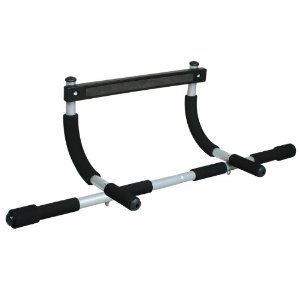
Get yourself an indoor pullup bar. Grab a weighted dip belt or whatever you have lying around.
Your Thoughts?
Got any feedback? Are you one of the candidates who plateaued on the Armstrong Basic workout? Please leave your feedback below.
Related Posts
Test Your Physical Fitness With This PFT Benchmark Workout
Thanks to Candidate X who graduated in the summer of 2016 for this benchmark PFT workout. “There was a MARSOC Captain I met after graduating OCS and he took my OSS through, what he called, a good Benchmark PFT. I would have to agree. It’s very simple, but the cumulative loading effect is what makes this difficult.” Benchmark PFT 5 pull-ups (kip when you can … Continue reading Test Your Physical Fi
Training with Mother Nature
Thanks to Caleb Baker, experienced trainer and founder of DynamicU for authoring this post on training with Mother Nature. Coach Baker has trained military personnel from every branch, professional/collegiate athletes, general population, including people suffering from chronic diseases like MS. It’s that time of year again- where the cream rises to the top: the fitness cream. The next few months
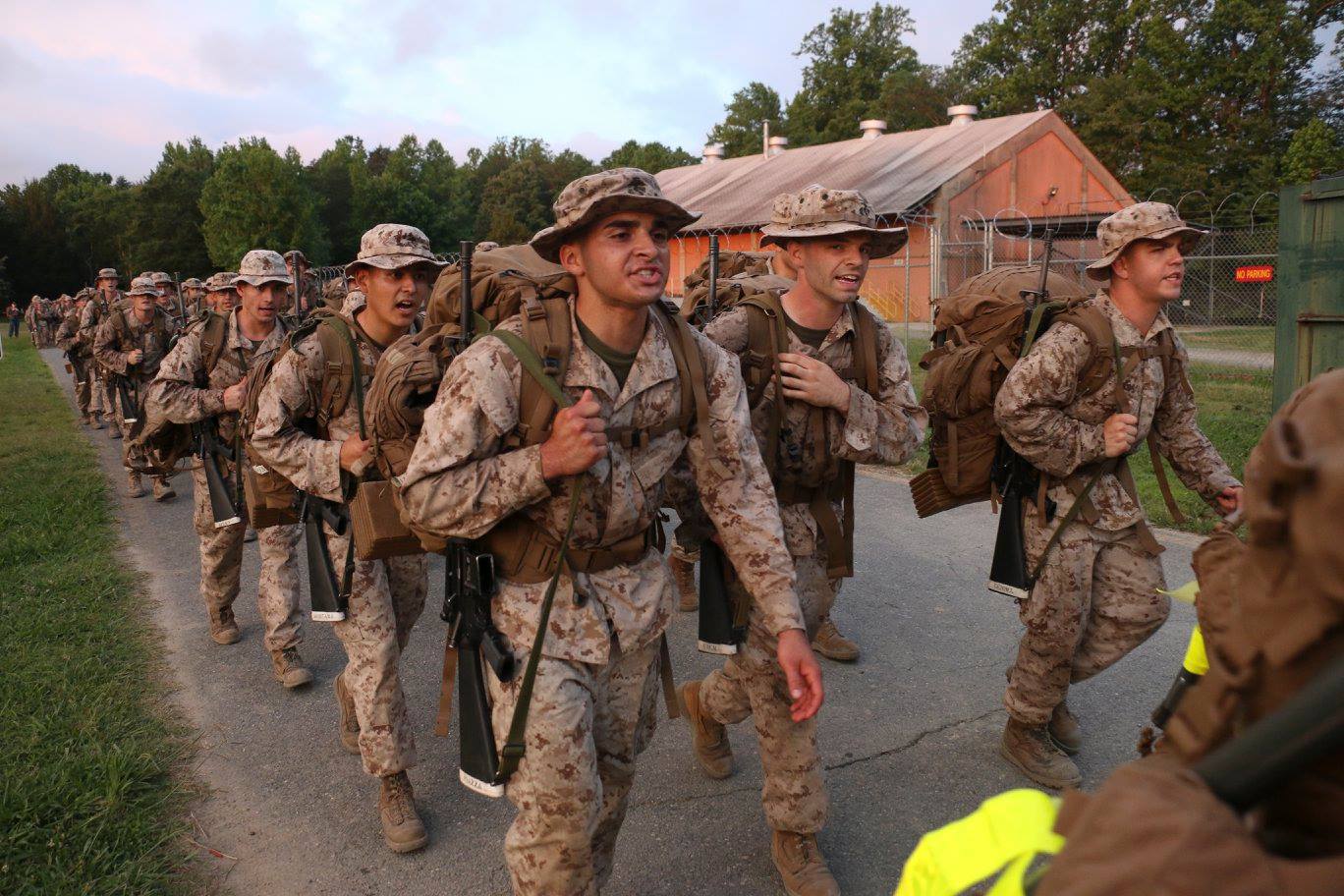
Humps (Hikes) at OCS
Hikes (known as humps) at OCS are one of the more difficult training evolutions that candidates will face on Brown Field. Preparation There are a few ways that candidates can help themselves prepare for humps. Most humps will occur before a major evaluation such as the Leadership Reaction Course or Small Unit Leadership Evaluation. You will spend the night in the field before the training evolutio