 Sleep Deficit: The Performance Killer
What does the most recent research tell us about the physiology of sleep and cognitive performance?
Four major sleep-related factors affect our cognitive performance.
The kinds of work and travel schedules required of business executives today pose a severe challenge to their ability to function well, given each of these factors.
Most of us think we’re in control of sleep—that we choose when to go to sleep and when to wake up.
1. Consecutive Hours Awake
The first has to do with the homeostatic drive for sleep at night, determined largely by the number of consecutive hours that we’ve been awake. Throughout the waking day, human beings build up a stronger and stronger drive for sleep. Most of us think we’re in control of sleep—that we choose when to go to sleep and when to wake up. The fact is that when we are drowsy, the brain can seize control involuntarily. When the homeostatic pressure to sleep becomes high enough, a couple thousand neurons in the brain’s “sleep switch” ignite, as discovered by Dr. Clif Saper at Harvard Medical School. Once that happens, sleep seizes the brain like a pilot grabbing the controls.
2. Sleep Deficit
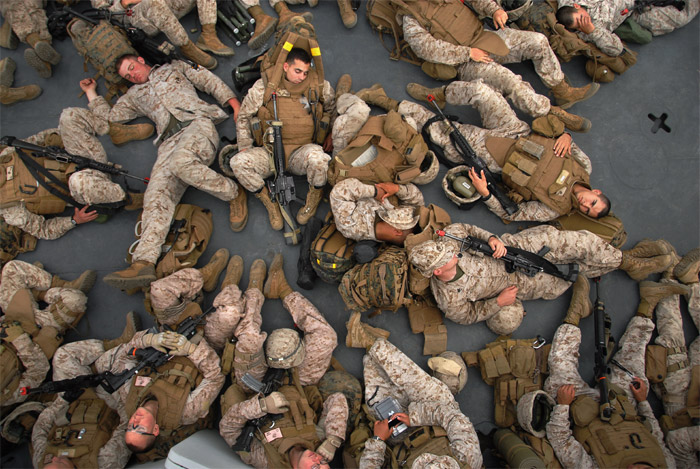
The second major factor that determines our ability to sustain attention and maintain peak cognitive performance has to do with the total amount of sleep you manage to get over several days. If you get at least eight hours of sleep a night, your level of alertness should remain stable throughout the day, but if you have a sleep disorder or get less than that for several days, you start building a sleep deficit that makes it more difficult for the brain to function…. If they average four hours of sleep a night for four or five days, they develop the same level of cognitive impairment as if they’d been awake for 24 hours—equivalent to legal drunkenness. Within ten days, the level of impairment is the same as you’d have going 48 hours without sleep. This greatly lengthens reaction time, impedes judgment, and interferes with problem solving. In such a state of sleep deprivation, a single beer can have the same impact on our ability to sustain performance as a whole six-pack can have on someone who’s well rested.
If they average four hours of sleep a night for four or five days, they develop the same level of cognitive impairment as if they’d been awake for 24 hours—equivalent to legal drunkenness.
3. Circadian Rhythm
The third factor has to do with circadian phase—the time of day in the human body that says “it’s midnight” or “it’s dawn.” A neurological timing device called the “circadian pacemaker” works alongside but, paradoxically, in opposition to the homeostatic drive for sleep. This circadian pacemaker sends out its strongest drive for sleep just before we habitually wake up, and its strongest drive for waking one to three hours before we usually go to bed, just when the homeostatic drive for sleep is peaking. In the midafternoon, when we’ve already built up substantial homeostatic sleep drive, the circadian system has not yet come to the rescue.
In the midafternoon, when we’ve already built up substantial homeostatic sleep drive, the circadian system has not yet come to the rescue.
That’s typically the time when people are tempted to take a nap or head for the closest Starbucks or soda machine. Thereafter, the circadian pacemaker sends out a stronger and stronger drive for waking as the day progresses. Provided you’re keeping a regular schedule, the rise in the sleep-facilitating hormone melatonin will then quiet the circadian pacemaker one to two hours before your habitual bedtime, enabling the homeostatic sleep drive to take over and allow you to get to sleep. As the homeostatic drive dissipates midway through the sleep episode, the circadian drive for sleep increases toward morning, maintaining our ability to obtain a full night of sleep. After our usual wake time, the levels of melatonin begin to decline. Normally, the two mutually opposing processes work well together, sustaining alertness throughout the day and promoting a solid night of sleep.